
Homeowner decisions
5 reasons to put a Level 2 EV charger in your Castle Rock garage
By Judson Cushing, Master Electrician (ME.0601023) · August 4, 2026 · 3 min read
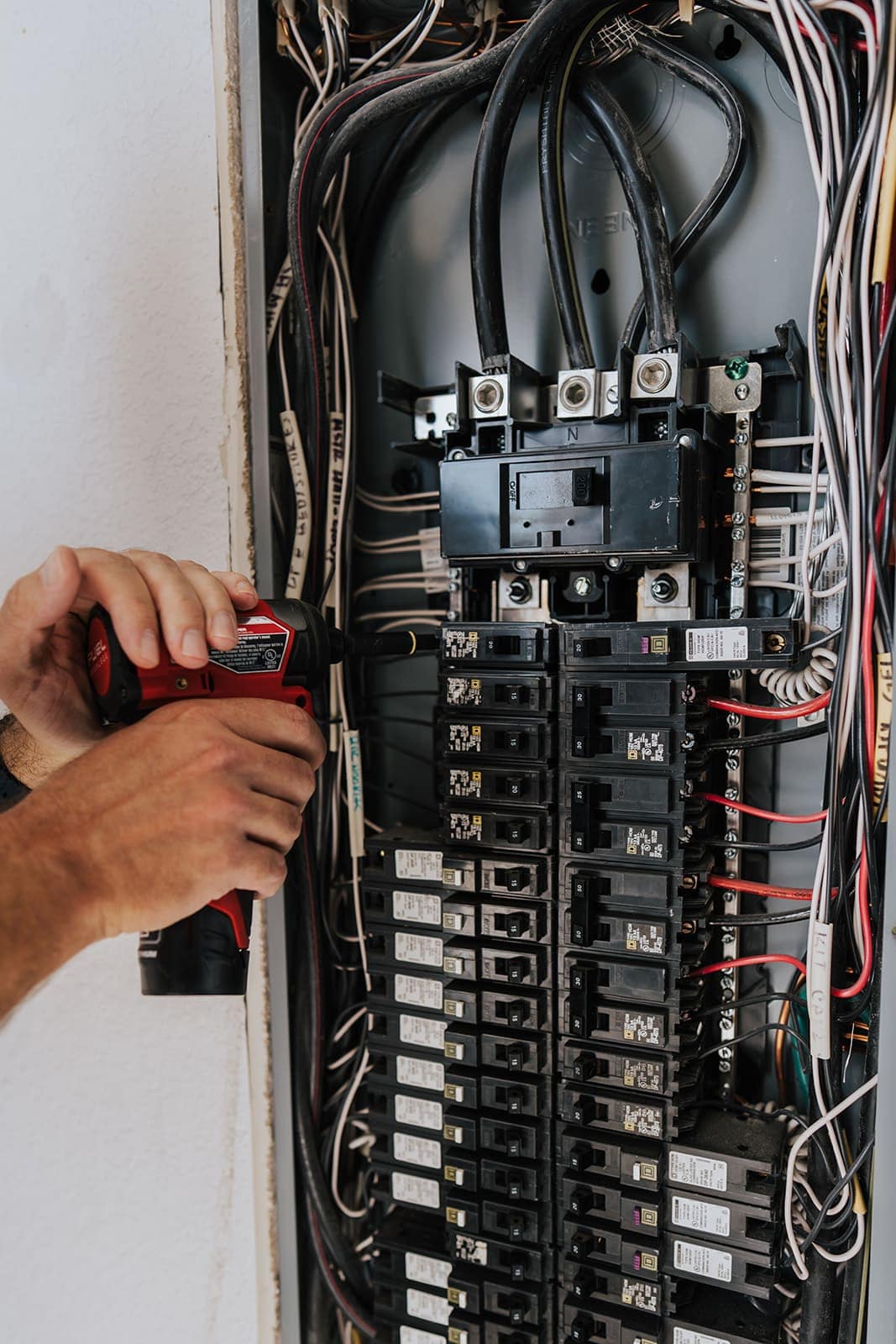
If you drive an EV and commute from Castle Rock toward the Tech Center or Denver, charging off a regular garage outlet does not keep up. A standard 120-volt outlet adds three to five miles of range an hour, and in winter most of that goes into warming the battery instead of filling it. A Level 2 charger runs on a dedicated 240-volt circuit and adds 25 to 40 miles an hour, which means you plug in at night and leave with a full battery every morning. Here is why it is worth doing properly.
1. It actually keeps up with how you drive
A Level 2 charger delivers roughly 7 to 11 kilowatts, against about 1.5 on a standard outlet. An 80 kWh battery that would take most of two days on a wall outlet fills in about seven hours on Level 2. If you have a longer commute, tow a trailer, or take the car up into the mountains on weekends, the standard outlet simply cannot replace what you use in a day. Level 2 can.
2. Home charging is far cheaper than public fast charging
Public DC fast chargers around Douglas County run roughly $0.35 to $0.48 per kilowatt-hour. Charging at home on an electrical panel that can support it, on CORE Electric Cooperative's off-peak window, costs a fraction of that. Set the charger to run between midnight and 6am and a year of typical driving costs a few hundred dollars instead of well over a thousand at public chargers. The hardware pays for itself inside two years.
3. It is easier on the battery
Repeated DC fast charging generates heat inside the pack and wears the cells faster over years of ownership. A home Level 2 charger feeds AC power through the car's onboard converter at a gentler rate, which lets the battery management system balance the cells at a moderate temperature. Slower, steady overnight charging is what the manufacturers design the pack around.
4. It adds real value to the house
Buyers in Castle Rock, Castle Pines and the surrounding area look for a home that is already set up for an EV. A permitted, hardwired charging circuit tells a buyer the panel has spare capacity and the wiring is done to code. An appraiser treats a permitted install as a capital improvement, not a fixture that walks out the door.
5. Done right, it is safe and it lasts
This is the part people cut corners on. A Level 2 charger is a continuous load, so the wire and breaker have to be sized for 125% of the charger's draw. The 240-volt circuit needs proper copper conductors, a correctly rated double-pole breaker, solid grounding, and, on an exterior run, expansion fittings because Front Range temperature swings move the conduit. Cheap hardware-store receptacles fail under repeated 32-amp cycles, which is why we use torque-tested, industrial-grade parts or hardwire the unit.
What your Castle Rock panel needs
Most homes with 200-amp service can take a Level 2 charger on the existing panel. Homes still on 100 or 125-amp service usually need either a service upgrade or a load-management device that shares capacity between the charger and the rest of the house. We run the load calculation before you buy anything, so you know which situation you are in.
The Town of Castle Rock requires an electrical permit for a new EV charging circuit, and the work is inspected. We pull the permit and meet the inspector as part of the job.
Ready to charge at home the right way? Book a free estimate or call (303) 648-1934.
About the author
Judson Cushing is a licensed master electrician (ME.0601023) and the owner of Allsafe Electric, serving Parker and the south Denver metro since 2018. More about Jud.